July 30, 2026
leading through transitions
12 min.
by Tahirih Michot and Sjoerd Luteyn
Part of Leading Through Transitions, a soul.com series listening to leaders navigating real change, one conversation at a time.
“It’s unfair to expect people to change without...”
Yuet Mee says this gently, almost as if she is reminding herself as much as us.
“first awareness, then understanding, then appreciation - and only then, lasting change in behaviour happens.”
She pauses for a moment.
“If we don’t start with this natural progression of learning and still expect people to change, isn’t it a bit unfair?”
Later in the conversation, she says something else that stays with us.
“If we are not one with nature, with each other, then we are just trying to put parts together in our efforts to unite. Oneness is beyond unity. It’s starting whole.”
Much of our conversation circles around these two insights. Change cannot be demanded before understanding has grown. And systems cannot be healed by assembling fragments while still failing to see the whole.
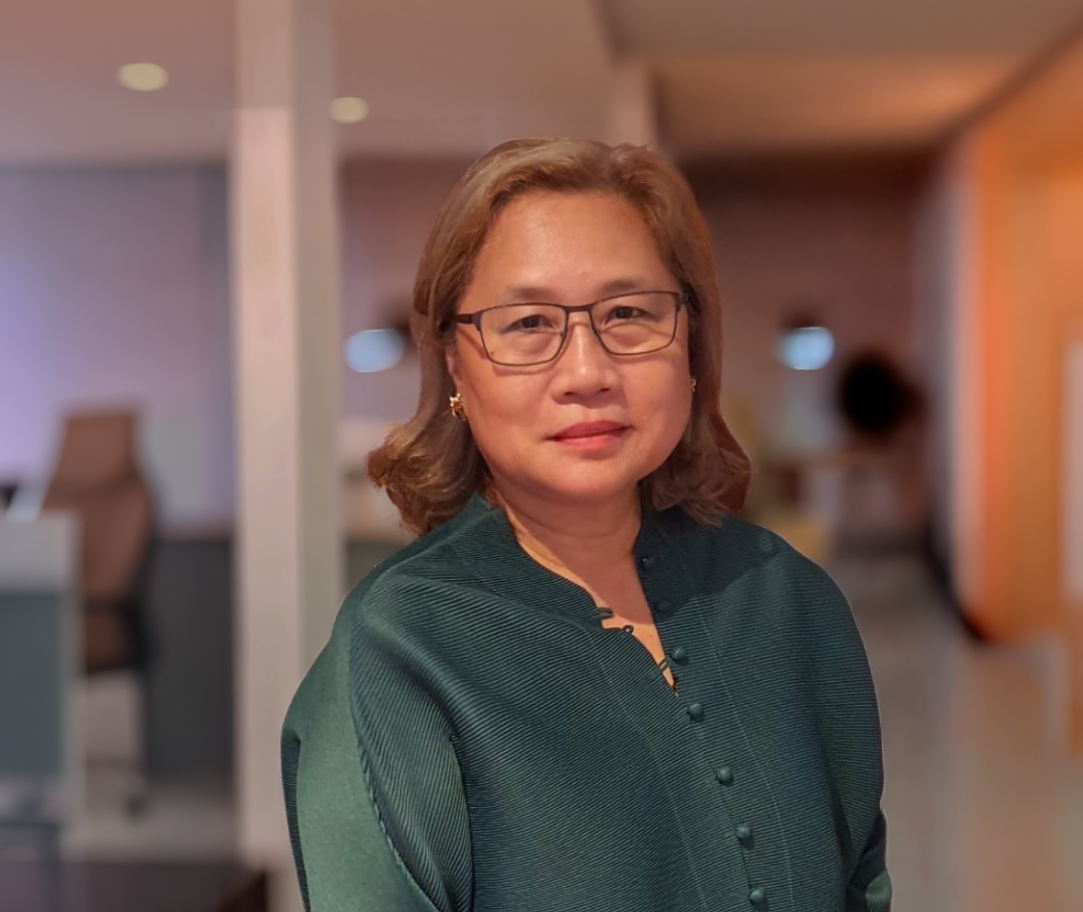
Yuet Mee Ho-Nambiar speaks to us from Malaysia. She is thoughtful, precise, and quietly direct. At the beginning of the conversation, she tells us that she is an introvert by nature. She does not particularly enjoy being in front. Yet her roles have often required her to chair meetings, speak publicly, and carry responsibility in institutional spaces.
Her professional life spans governance, finance, sustainability, infrastructure, community service, and faith-based trusteeship. She has served for nearly nine years on the board of a major regional financial institution, where she chairs the sustainability committee and also sits on the audit committee. She is a director of an infrastructure engineering company, and serves as a trustee of the Malaysian part of a large global not-for-profit conservation organisation. The last of these involves creating conditions to nurture the learning and capacity of those who serve alongside her across Asia - patient, devotional work of a different character from her corporate roles. Alongside this, she is engaged in literacy programmes, children’s classes, junior youth activities, and community initiatives in her neighbourhood.
This combination matters.
Yuet Mee is not speaking about institutional transition from a distance. She has worked inside the rooms where governance decisions are made. But she has also remained connected to communities, schools, families, and grassroots realities. Again and again, this becomes visible in the way she speaks. She moves between the boardroom and community without treating them as separate worlds.
When we meet, she is reflecting on active transitions in several spaces: succession in a values-led business, sustainability becoming strategically embedded in institutional governance, the responsible use of AI, and her own approaching departure from a board role after nearly nine years.
Yet the strongest theme that emerges is not sustainability itself. It is how understanding changes.
Today sustainability has become a familiar organisational language. There are frameworks, reports, metrics, commitments, strategies, and governance requirements. Most large institutions now know they must speak about it.
But when Yuet Mee first stepped into boardrooms, this language was still new - sustainability was only just finding its way in.
She recalls,
“Sustainability then was more something we talked about than something we were doing.”
At that time, when these questions surfaced around board tables, she noted that they met a range of honest perspectives. These views were by experienced, intelligent, worldly people, reflecting the prevailing corporate wisdom of the time.
“Surely, it’s about ROI, it’s about share price. These are non-financial matters.” - that was the common refrain about sustainability.
She is careful not to describe this as bad faith.
“It’s just that awareness hadn’t arrived yet. Many of us grew up with a different paradigm of what drives corporate success. I was schooled in that same paradigm myself.”
This distinction is important.It shaped her whole response because she believes most of us would do the right thing if we knew more, and knew how.
Convinced that transformative change begins when mental models change, she approached her fellow board members not as opponents to be corrected, but as people who needed time, exposure, conversation, and learning. She nudged learning opportunities into boardroom agendas. She invited external speakers into board meetings. She created small learning spaces inside formal governance processes.
Over time, the conversation began to shift. Sustainability became connected to risk. To resilience and long-term value creation. To stakeholders. To the future of the organisation. To society.
The transition did not happen through one dramatic intervention. It happened through repetition. Through consistency. Through what she calls “drip feed.” A little learning. A little reflection. A little movement. Again and again. Understanding and conviction takes time.
Listening to her, we began to wonder whether many organisations underestimate this slower work. They introduce strategies and expect alignment. They set targets and expect behaviour change. They communicate purpose and expect people to feel ownership.
But Yuet Mee keeps returning to a different sequence. Awareness. Understanding. Appreciation. Behaviour change. Perhaps many transitions fail because organisations begin too late in the process.
One of the most striking examples she shares is also one of the simplest. She would sometimes ask fellow board members to watch a short sustainability-themed video - not alone, not in the office, but with their children or grandchildren. The invitation was deliberate.
“Don’t watch it on your own,” she told them. “Watch it with your grandchild or watch it with your child or a young person.”
And she would give them reflection questions. One of them was simple: what happens if everything continues as business as usual? One board member shared what had happened in those conversations.
“My grandchild asked me why this generation did this.”
Suddenly, sustainability was no longer only a technical or regulatory issue. It had entered the family. It had become relational. It had become intergenerational. This seems to be one of Yuet Mee’s quiet capacities: she brings abstract institutional questions back into human life.
Climate becomes grandchildren.
Purpose becomes personal meaning.
Governance becomes responsibility.
Stakeholders become people.
The shift is subtle, but powerful. Large systems often protect themselves through abstraction. Reports, frameworks, committees, and financial instruments can create distance from consequence. Yuet Mee seems to work in the opposite direction. She reconnects institutional decision-making with lived reality.
The question is no longer only, “What does the regulation require?”
It becomes, “What future are we helping to create?”
The same pattern appears in her reflections on organisational purpose.
One of the organisations she served was working to activate its corporate purpose with its people. She describes sitting in on purpose workshops and realising that the conversation was largely moving in one direction: from the organisation to the employee. People were being told what the organisation’s purpose was and why their work contributed to it. But they were not being helped to ask: what matters to me? They were not given the opportunity to reflect on how their personal purpose might or could be aligned to their organisation’s purpose.
So she suggested another approach: the Ikigai1 framework. Help people explore what they love, what they are good at, what the world needs, and what they are paid for. To figure out their ikigai. Then invite them to find the connection between their personal purpose and the organisation’s purpose.
This matters because purpose cannot simply be transferred from an institution to a person. A purpose statement can be communicated. Purpose itself has to be discovered.
When people find the relationship between their own sense of meaning and the work of the organisation, something different becomes possible. Alignment is no longer compliance. It becomes activation. Again, the deeper pattern appears. Do not ask people to change before understanding has grown. Do not ask people to carry purpose before it has become meaningful.
As the conversation deepens, Yuet Mee returns repeatedly to oneness and interconnectedness.
She speaks about stakeholders, nature, family, society, communities, and future generations. But these are not separate categories in her mind. They belong together. They are linked and they are interdependent. This is where her thinking moves beyond sustainability language.
Sustainability can easily become a set of parts: environmental targets, social programmes, governance structures, reporting requirements, financing instruments. All of these may matter. But something essential can still be absent.
“If we are not one with nature, with each other,” she says, “then we are just trying to put parts together in our efforts to unite. Oneness is beyond unity. It’s starting whole.”
That sentence carries much of the depth of the conversation. Many organisations are now trying to respond to connected problems through fragmented structures. Climate is handled by one department. People by another. Risk by another. Technology by another. Purpose by communications. Governance by the board.
But the transitions facing organisations do not remain neatly divided. Climate is economic. Technology is ethical. Governance is relational. Purpose is operational. Trust is structural. Yuet Mee seems to be pointing toward a different way of seeing. Not simply joining more pieces together, but perceiving the whole more fundamentally.
Toward the end of the conversation, another transition becomes visible - this time in her own professional life. The infrastructure company she serves is moving from founder-led to management-led. And Yuet Mee herself is approaching the end of one of her board tenures. After almost a decade, regulatory tenure limits designed to preserve board independence require her to step down. She speaks with affection about the institution. She will miss the people there. But she also carries questions about what remains.
Learning has been introduced. Sustainability has advanced. Purpose has moved. Governance conversations have shifted. People understand more than they did before. But is it embedded deeply enough?
Across her professional work, she is particularly concerned about two areas. The first is AI. She distinguishes sharply between the use of AI and the responsible use of AI. Use cases are one thing. Responsible governance is another. The distinction matters because technological adoption can move faster than ethical reflection.
The second concern is deeper. She wonders whether the organisations she has worked with have truly grasped our fundamental oneness and interconnectedness - and with it our interdependence - or whether sustainability may still remain partly a matter of assembling parts.
This is perhaps one of the most important questions in the interview. Can an organisation carry forward a deeper orientation once the person who has patiently nurtured it is no longer there?
Many organisations depend on individual champions. A person enters a system, carries a conviction, opens conversations, pushes gently but consistently, and creates movement. But when that person leaves, the system is tested.
Was the change personal? Or has it become institutional?
Much of contemporary leadership language is shaped by urgency. Transformation. Disruption. Acceleration. Scale. Speed. And the urgency is real. Climate instability is not waiting. AI is advancing quickly. Trust in institutions is fragile. Social and economic pressures are intensifying. Organisations are being asked to adapt continuously.
Yuet Mee does not deny this. But she offers another kind of discipline. The discipline of patience. Not passivity. Not delay. Not avoidance. Patience as sustained attention. Patience as repeated conversation. Patience as the refusal to shame people into change before helping them understand reality differently.
There is a tension here. The world is changing quickly. Understanding often develops slowly.
Can organisations learn fast enough? Can leaders create conditions to nurture reflection, discernment, and ethical responsibility while pressure intensifies around them?
The interview does not resolve this question.
But it does offer an important insight. If transition requires people to move from one paradigm to another, then information alone will not be enough. Nor will pressure. Nor will slogans about purpose or sustainability.
People need spaces where they can see differently. They need conversations that reconnect institutional decisions with human consequences. They need learning before evaluation. They need leaders who can hold conviction without judgement.
Listening to Yuet Mee, we began to sense that the patient work of shifting paradigms may be one of the least visible and most necessary forms of leadership today.
If many of the transitions now confronting organisations require deeper shifts in perception, responsibility, and relationship, what kinds of understanding are leaders being called to cultivate now?